At the 17th meeting under the UN Convention on Biological Diversity (CBD) in October 2026, Parties will review their collective progress towards the 2030 targets set out in the Kunming-Montreal Global…
From global ambition to national commitments: national target setting under the Global Biodiversity Framework
In 2022, under the UN Convention on Biological Diversity (CBD), 196 countries committed to take urgent action to halt and reverse global biodiversity loss. As part of the Global Biodiversity Framework…
Advancing Locally Led Approaches for people, climate and nature
Locally led approaches are increasingly being recognised as essential for addressing interconnected climate, biodiversity, and development challenges. These approaches require enabling political…
The global biodiversity crisis is calling for transformative change to move towards a nature-positive future in which nature is restored for the benefit of people and planet. This is articulated in…
Operationalizing the biodiversity Global Review to strengthen CBD effectiveness: priorities for COP17 and beyond
The adoption of the Global Biodiversity Framework (GBF) under the UN Convention on Biological Diversity during COP15 in 2022 marked an important milestone for international biodiversity governance…
Future pathways to restore the ecological quality of global freshwater ecosystems
This is a background report of the study ‘Geography of future water challenges – Bending the trend’, which gives an overview of possible achievements of water-related measures within the SSP2 Baseline…
Over the last decade, the values of water have received attention both on a global level and in the Netherlands. These values include the full range of functions, benefits, (dis-)services, and risks…
The many pathways of mining impacts on biodiversity
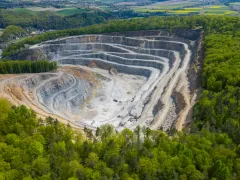
Mining is a significant driver of biodiversity loss, with impacts expected to escalate due to rising metal demand for the energy transition. However, global assessments of mining impacts are still in…
Implications of global distributive justice principles for implementation of the Kunming-Montreal Global Biodiversity Framework
In the era of the sixth mass extinction, reversing global biodiversity loss is of vital importance for life on Earth. In 2022, parties to the Convention on Biological Diversity (CBD) adopted the…
Impact factors for quantifying country-level terrestrial biodiversity intactness footprints (IBIF)
There is an increasing demand for consistent methods and tools to quantify biodiversity footprints: the magnitude of biodiversity loss associated with all direct and indirect impacts associated with a…
 PBL Netherlands Environmental Assessment Agency