Stocktake tool hosted by PBL measures progress towards Paris goals
What are the implications of the implementation of national climate policies, and how do they add up to the greenhouse gas emission reductions needed to keep global warming to well below 2 ˚C or even...
Two-thirds of major emitting countries still not on track to reach Paris climate proposals
In the Paris Climate Agreement, which went into effect on 4 November 2016, countries promised to implement policies to reduce their greenhouse gas emissions. A report by NewClimate Institute, PBL...
Consequences of scenarios that limit global warming in line with the Paris Agreement
This new PBL-JRC-IIASA report presents a set of scenarios that limit global warming to below 2 °C and 1.5 °C, by using either the full portfolio of reduction options, as represented in the IMAGE and...
Growth in global greenhouse gas emissions resumed in 2017
In 2017, the warmest year on record of years without the occurrence of El Niño, and a year with normal global economic growth, the increase in global greenhouse gas emissions resumed at a rate of 1.3%...
Opportunities in G20 Countries for Long-term, Low-emission Pathways
Opportunities exist in G20 countries (Australia, Brazil, Canada, China, EU, India, Indonesia, Japan, Republic of Korea, Russian Federation, and the United States) to strengthen existing climate...
Opportunities for Enhanced Action to Keep Paris Goals within Reach
Current climate policies are inconsistent with the objectives of the Paris Agreement, but model-based scenario analyses also show that there are several opportunities to strengthen current climate...
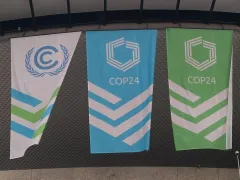
PBL research supports Katowice Climate Conference (COP24)
The UN Climate Change Conference in Katowice (COP24) is the next step for governments to implement the 2015 Paris Climate Agreement. PBL Netherlands Environmental Assessment Agency contributes to this...
Nations must triple efforts to reach 2°C target according to 2018 annual Emissions Gap report by UNEP. It is still possible to keep global warming below 2°C, but the technical feasibility of bridging...
Dutch policies for company transparency on sustainability performance need to be improved
According to a new EU directive on non-financial information, companies are accountable for how they deal with societal interests. The directive requires that companies publicly report on their...
Spatial modelling of participatory scenarios advances landscape stakeholder discussions on shared pathways supporting SDGs
Spatially explicit modelling tools can support participatory scenario development with stakeholders. This can be concluded from a set of casestudies in three different countries. The combined approach...
 PBL Netherlands Environmental Assessment Agency