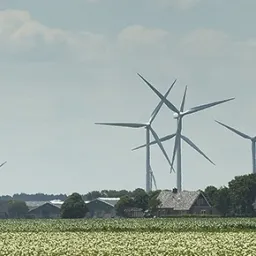
Quantifying the Costs and Benefits of Grid Investments to Decarbonize the European Energy Supply
Europe aims to achieve climate neutrality by 2050 through the electrification of fossil fuel-based energy demand and the large-scale deployment of renewable generation. Realizing these goals requires significant transmission expansion to facilitate cross-border electricity trade and to connect renewable generation sites to major demand centers. Additional transmission capacity entails high upfront costs and its future value depends on uncertain developments in generation technologies, fuel prices, and electricity demand.
We examine how different grid investments perform under alternative future scenarios using a model-based case study on the decarbonization of the European energy supply. Quantifying the financial costs and benefits of three contrasting grid archetypes, we find that additional grid capacity comes at a sizable premium but offers substantial option value, specifically when nuclear generation becomes unavailable or relatively costly.
Authors
Specifications
- Publication title
- Quantifying the Costs and Benefits of Grid Investments to Decarbonize the European Energy Supply
- Publication date
- 20 January 2026
- Publication type
- Article
- Publication language
- English
- Product number
- 6173