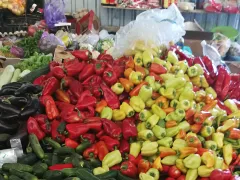
Unravelling biodiversity impacts of consumption: a production layer decomposition analysis for the Netherlands
Unsustainable consumption patterns, through factors like land use, greenhouse gas (GHG) emissions, and pollution, are significant drivers of global biodiversity loss. In this paper, we demonstrate the…
The European Commission has proposed adjustments to the EU emissions trading system (EU ETS). Until 2050, these adjustments can lead to 33% more CO₂ emissions in the energy-intensive industry…
Sustainability transitions in an interconnected world involve more than purely technical and economic choices. Transition policies developed in one country can have consequences elsewhere, while…
Model-based scenario analysis is often used to evaluate the impact of national climate policies on global greenhouse gas (GHG) emissions. ‘Current Policies’ scenarios are thus normative scenarios that…
From global ambition to national commitments: national target setting under the Global Biodiversity Framework
In 2022, under the UN Convention on Biological Diversity (CBD), 196 countries committed to take urgent action to halt and reverse global biodiversity loss. As part of the Global Biodiversity Framework…
Food systems transformation would reshape global agriculture
Food systems are a major contributor to exceeding planetary boundaries and poor quality diets are a key mortality risk globally. Projected population and income growth could exacerbate these…
Inequalities in the cooling gap and energy implications of adaptation
While residential space cooling is essential to protect populations from heat-related health impacts, cooling access is expected to remain a considerable adaptation challenge throughout the 21st…
Critical Infrastructure failure escalates the macroeconomic impacts of disasters
Critical infrastructures such as power systems are vulnerable to disaster-induced disruptions, forcing industrial shutdowns and production losses. Because businesses are linked to each other through…
Advancing Locally Led Approaches for people, climate and nature
Locally led approaches are increasingly being recognised as essential for addressing interconnected climate, biodiversity, and development challenges. These approaches require enabling political…
From Agenda to Action: Accountability Through Measurable Goals
The Global Action Agenda under the UNFCCC was updated at COP30 and is a promising instrument to catalyse climate action, focusing on cooperation between countries, subnational, and non-state actors…
 PBL Netherlands Environmental Assessment Agency