Alternative pathways to the 1.5 °C target reduce the need for negative emission technologies
Mitigation scenarios that achieve the ambitious targets included in the Paris Agreement typically rely on greenhouse gas emission reductions combined with net carbon dioxide removal (CDR) from the…
Vehicle emissions and impacts of taxes and incentives in the evolution of past emissions
The analysis presented in this report was framed around two key objectives. The first was to create an inventory of the different vehicle taxation and incentive schemes in place across Europe. The…
Evaluating EDGARv4.tox2 speciated mercury emissions ex-post scenarios and their impacts on modelled global and regional wet deposition patterns
Speciated mercury gridded emissions inventories together with chemical transport models and concentration measurements are essential when investigating both the effectiveness of mitigation measures…
Natural capital accounting for the sustainable development goals
The World Bank WAVES programme supports several countries with the development of natural capital accounts (NCAs). NCAs link natural capital to a country’s system of national accounts and can also be…
Climate extremes, land–climate feedbacks and land-use forcing at 1.5°C
This article investigates projected changes in temperature and water cycle extremes at 1.5°C of global warming, and highlights the role of land processes and land-use changes (LUCs) for these…
Evaluating the use of biomass energy with carbon capture and storage in low emission scenarios
Biomass Energy with Carbon Capture and Storage (BECCS) is heavily relied upon in scenarios of future emissions that are consistent with limiting global mean temperature increase to 1.5 °C or 2 °C…
Comparing recent suburban developments in Austria and the Netherlands
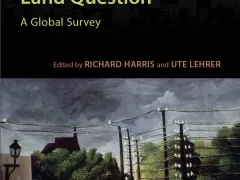
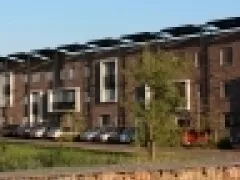
The chapter 'Comparing recent suburban developments in Austria and the Netherlands' in the book 'The Suburban Land Question: A Global Survey' describes the results of a comparative study of recent…
Future agricultural phosphorus demand according to the shared socioeconomic pathways
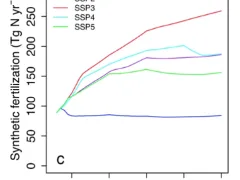
The five Shared Socioeconomic Pathways (SSP) show similar global crop P uptake and P inputs, despite differences in population and incomes. In the sustainability scenario SSP1, the increase in P…
Simple Planning Rules for Complex Urban Problems: Toward Legal Certainty for Spatial Flexibility
In the course of the nineteenth century, many countries attempted to simplify their regulatory systems; since then, however, the entire legal apparatus has become ever more complex, being based on the…
Large uncertainty in carbon uptake potential of land‐based climate‐change mitigation efforts
Most climate mitigation scenarios involve negative emissions, especially those that aim to limit global temperature increase to 2°C or less. However, the carbon uptake potential in land‐based climate…
 PBL Netherlands Environmental Assessment Agency