There is a large gap between ambition and policy towards 2040; emission reductions for 2030 stagnate
The Netherlands has a large gap to bridge to approach the EU ambition of 90% fewer European greenhouse gas emissions in 2040 compared to 1990. As of January 1, 2026, with current implemented policy (‘the baseline projection’), we are heading towards a 57-68% emission reduction in 2040; if we also include calculable plans (‘additional policy’), this figure reaches 61-72%. Accordingly, the Netherlands is not on track to reach the legal goal of climate neutrality in 2050. In fact, the projected emission reductions for 2030 have been stagnating for three years now, as political deadlocks have slowed down the energy transition. It remains extremely unlikely (with less than 5%) that the Netherlands will reach the climate goal of 2030, according to the Climate and Energy Outlook of 2026.
In the 35 years between 1990 and 2025, the Netherlands has reduced its greenhouse gas emissions by approximately one-third. The remaining two-thirds in emission reductions must be realised in the 25 years left through 2050, which is a significant challenge. To get the energy transition on track soon, strong additional policy is needed, on both a national and European level. However, it is also important that such policy is not only aimed at 2030, but leads to structural emission reductions in the long term.
Dependence on fossil imports will remain high towards 2040
Last year, the Netherlands imported 77% of its energy use, which is slightly lower than the historically high level of energy dependence of 79% in 2023. Before natural gas extraction in the province of Groningen was scaled down beginning in 2015, the country was at only 70%. Because of increased use of renewable energy, energy dependence will decrease again to 65-70% in 2030, and 49-63% in 2040. This will make the Netherlands more resilient to shocks on the world market, which have occurred regularly in recent years, but the dependence on the import of fossil energy still remains high.
The coalition agreement particularly promotes offshore wind and CO2 capture and storage
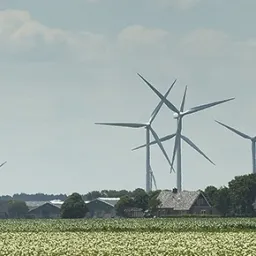
By the year 2040 in our baseline scenario, offshore wind farms will have a combined capacity of 21 GW; until only a few years ago, this amount was the stated objective for 2030. That brings the share of renewable energy in total energy use to 42-55% by 2040. Since the reference date for the baseline scenario, the Dutch Cabinet has announced two-way contracts with a guaranteed price (also known as Contracts for Difference) and extended the SDE++ operating subsidy scheme. These two policy measures will have limited effect by 2030, but they will go a long way towards making a difference after that. The SDE++ scheme mainly promotes CO2 capture and storage. The capacity of offshore wind farms will grow from 30 to 36 GW in our projection with additional policy, meaning the share of renewable energy will amount to 52-67% in 2040. However, in this scenario, the share in renewable energy in 2030 will remain around 32-38%, which is not high enough to reach the Dutch goal of 39% by that year.
Comparing with the Climate and Energy Outlook 2025: Blending of biofuels into diesel will have effect in 2030
In the baseline scenario, emission reductions will be 46-53% in 2030 compared to 1990. This is nearly identical to the projections made last year. The same is true when we include additional policy in this projection; the figure stands at 47-54%. In the transport sector, additional blending of biofuels in particular, through the so-called Fuel Transition Obligation, will lead to fewer emissions. In the case of diesel motors, up to 40% biofuels will be blended into diesel by 2030. In the electricity sector, however, emissions lie somewhat higher because of increased use of gas-fired power stations. The Dutch nitrogen reduction package that was published on June 26 appeared too late to include in this report.
Further delays in building infrastructure are becoming a serious risk for the energy transition
The demand for transport capacity on the electricity grid is increasing faster than network operators can handle. Constructing energy infrastructure is critical in shaping the transition. Sufficient capacity on the electricity grid, further roll-out of district heating networks, infrastructure for CO2 capture and storage, and the construction of a hydrogen network are all needed for the energy transition. However, the construction and expansion of such infrastructure has been delayed, including on account of a shortage of technical personnel, lengthy licensing procedures, and scarcity in both materials and space.
Significant differences between sectors
In the transport sector, emissions will keep declining significantly after 2030 as a result of phasing out the internal combustion engine. The current CO2 price of the EU ETS (European Emissions Trading System) is too low to make investments for a fully sustainable industry profitable. For that, extra policy is needed, such as additional European and national norms and subsidies. In agriculture, greenhouse gas emissions have barely decreased over the past 20 years. Livestock farming is one of the few aspects of the economy for which there is scarcely any specific climate policy as of yet. The new rules on methane inhibitors for livestock, announced in the coalition agreement, are a first step towards such policy.
The Climate and Energy Outlook as a monitoring and accountability tool
The annual Climate and Energy Outlook, in accordance with the Dutch Climate Act, is an important accountability tool for Dutch climate and energy policy. The report provides insight into the project effects of policy measures. The Outlook is drawn up by PBL in close collaboration with TNO, CBS, and RIVM, and with contributions by the RVO and WUR.